

For any young child, play is the most effective form of learning, connection, and entertainment.
For a toddler with autism, playing in the outside world is like discovering a universe filled with entirely new sensations.
However, more than just entertainment, play fosters key tools that help your child learn to self-regulate while discovering the environment around them.
In this guide, we will explore how outdoor sensory toys can act as catalysts for daily learning.
If you want to know how Koala ABA can support your child in reaching their full potential through science and empathy, keep reading!
Is outdoor sensory play vital for children with autism?

Clearly, the outdoor environment offers a freedom of movement and a variety of stimuli that no indoor room can match.
Likewise, through outdoor sensory toys, children with autism experience a “sensory diet,” which is fundamental for reaching an optimal state of balance.
When we integrate sensory play with early intervention, we provide children with the necessary tools for their brains to create strong, lasting connections.
This process benefits critical areas such as:
- Brain Plasticity: It makes it easier for a child with autism to adapt to new environments and routines with less resistance.
- Reflex Integration: It helps coordinate elementary movements, which serve as the foundation for more complex skills.
- Information Processing: The child learns which sounds or textures are important while ignoring irrelevant stimuli.
What are outdoor sensory toys and how do they work?
Outdoor sensory toys are specifically created to stimulate certain senses in a controlled way, allowing a child with autism to take in and process that information.
These toys are objects that invite the child to proactively interact with their surroundings through sight, touch, sound, and movement. Their three primary functions include:
- Normalizing Responses: Helping a young child stop fearing certain textures (tactile desensitization).
- Developing Motor Milestones: Fostering early pincer grasp, dynamic balance, and core strength.
- Playful Motivation: Turning daily learning into an intrinsically rewarding activity for the child.
How do these toys support sensory processing?

Sensory processing is the method a child’s brain uses to organize and make sense of the information it receives.
The right toys act as true “tuners,” helping to filter and process this data coherently.
Outdoor sensory toys focused on swinging and spinning are fundamental for the vestibular system. By using rhythmic stimuli, the child achieves:
- Nervous System Modulation: Helping them “wind down” more quickly after a moment of overstimulation.
- Sustained Attention: An organized vestibular system allows the child to focus better on learning tasks.
- Behavior Substitution: Movement on a swing can replace body rocking with a more socially integrated alternative.
Can outdoor play improve functional communication?
Effective communication is rooted in the desire to share an emotion or a need.
Outdoor sensory toys create moments so exciting that the child feels a natural urge to express themselves.
There is a neurological basis linking gross motor movement with language areas. When climbing, jumping, or swinging, the child experiences:
- Activation of the Phonatory System: Physical effort and spontaneous laughter activate the vocal cords and controlled breathing.
- Rhythmic Coordination: The rhythm of body movement helps in understanding the rhythm and cadence of human speech.
- Increased Verbal Approximations: Enthusiasm during play often generates sounds, syllables, and, eventually, words.
The best outdoor sensory toys for children with autism.

To ensure your choice is effective, we recommend classifying toys according to the sensory system you wish to strengthen.
While it may seem like a complex classification, it is vital to understand which types of outdoor sensory toys your child needs right now.
Here is a breakdown we have prepared for you:
Vestibular Stimulation (Balance and Movement).
- Nest or Cocoon Swings: These offer more security and allow the child to feel rhythmic movement throughout their entire body.
- Balance Boards and Low Beams: These challenge the child’s brain to better organize posture and physical stability.
- Slides and Teeter-totters: These efficiently work on the perception of speed and changes in gravity.
Tactile Exploration (Touch and Textures).
- Sand and Water Tables: These toys are decisive for tactile exploration and cause-and-effect play.
- Mud Kitchens: These allow deep interaction with natural textures, helping to desensitize a child to textures they might otherwise reject.
- Outdoor Sensory Walls: Panels featuring various textures, mirrors, and reliefs to stimulate curiosity and tactile exploration.
Proprioceptive System (Strength and Body Position).
- Trampolines with Safety Nets: These generate deep pressure that helps the child’s brain focus and better assimilate stimuli.
- Crawl Tunnels and Obstacle Courses: These help a child with autism map their own body and understand spatial boundaries.
- Wheelbarrows, Ropes, and Pull Toys: These require sustained muscular effort, which helps calm and focus the child.
Why is sensory play key to my child’s ABA Therapy?
Today, cutting-edge therapies integrate outdoor sensory toys to ensure that children with autism apply their new skills to everyday life.
Fortunately, many families in Florida benefit from integrating outdoor sensory play with early intervention programs and ABA therapy, fostering the relationship between the home and therapeutic environments.
At Koala ABA, we use Natural Environment Teaching (NET) to achieve lasting results through:
- Systematic Desensitization: Introducing new textures or outdoor noises gradually and playfully.
- Natural Reinforcers: Access to outdoor sensory toys becomes the reward for reaching therapeutic goals.
- Real-Life Skills: Taking therapy into the real world by practicing greetings and simple rules for group play.
Frequently Asked Questions about Outdoor Sensory Toys.
1. Why is outdoor sensory play important for children with autism?
It allows them to experience a variety of stimuli not found indoors.
This promotes brain plasticity, improves reflex integration, and optimizes information processing, helping the child adapt to their environment while developing social and motor skills.
2. What are outdoor sensory toys and how do they help my child?
They are designed to stimulate the senses in a controlled way. They help normalize tactile responses, develop motor milestones like balance and coordination, and motivate learning through fun activities.
3. Can outdoor sensory toys improve my child’s communication?
Yes. Activities like climbing or swinging coordinate body rhythm with speech rhythm, increasing verbal approximations and fostering spontaneous expression.
Koala ABA & Learning Centers: Transforming Play into Real Learning.
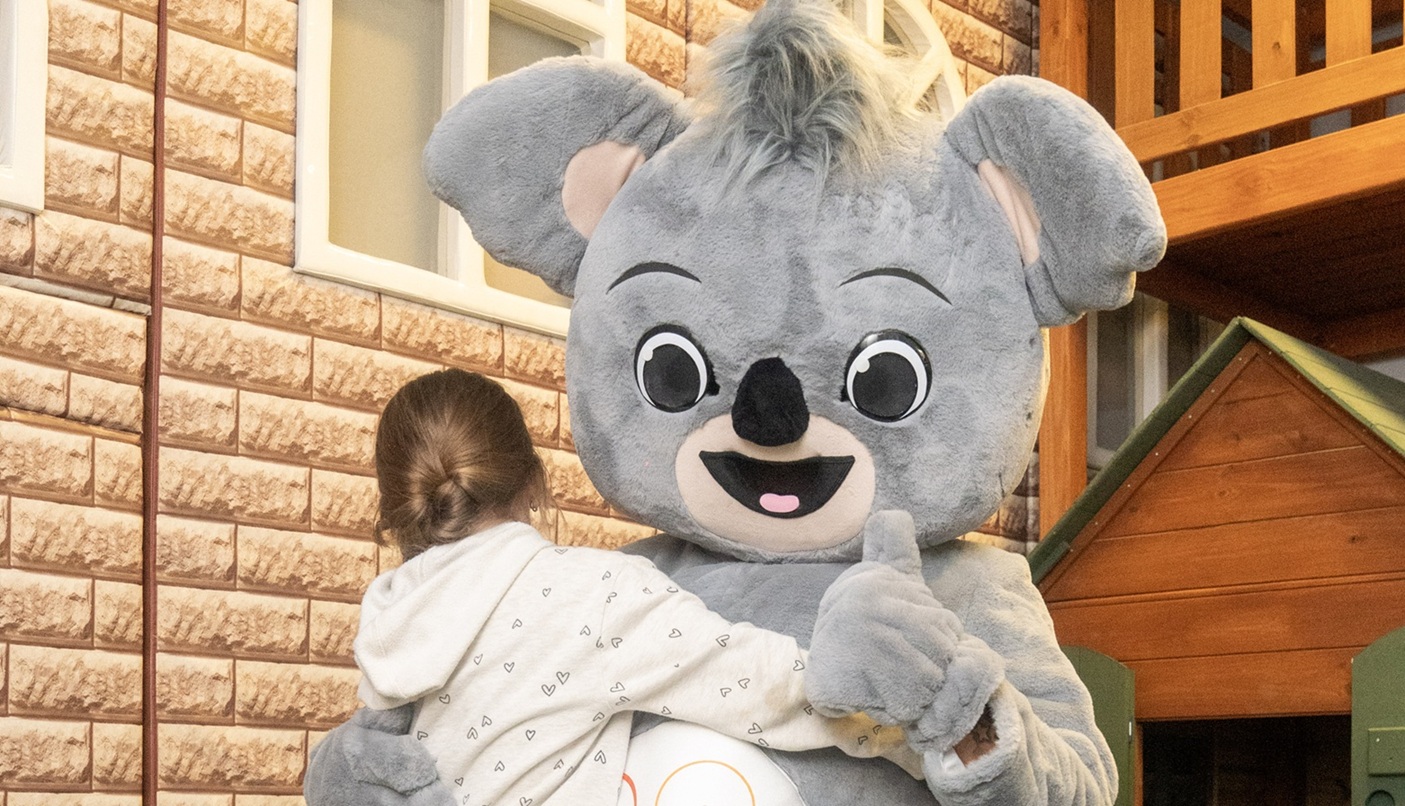
Outdoor sensory play is not just fun; it is a powerful tool for the holistic development of every child with autism.
At Koala ABA & Learning Centers, we understand that every child has a unique sensory profile and that learning is most effective when it is motivating and safe.
Our programs combine personalized ABA Therapy with outdoor environments, allowing your child to:
- Develop real-life skills: From group play rules to social interaction, applying what they’ve learned in therapy.
- Explore safely: We introduce textures, movements, and sounds gradually to strengthen sensory regulation.
- Receive natural reinforcement: Access to sensory toys becomes a motivating prize, fostering autonomy and confidence.
In our Florida locations, every space is designed to merge science and play.
We also offer comprehensive support to families, including parent training on how to use outdoor sensory toys and strategies to continue learning at home.
You don’t have to walk this path alone. Contact us today!
Let your child experience the world through their senses… and let every moment of play become a real achievement.