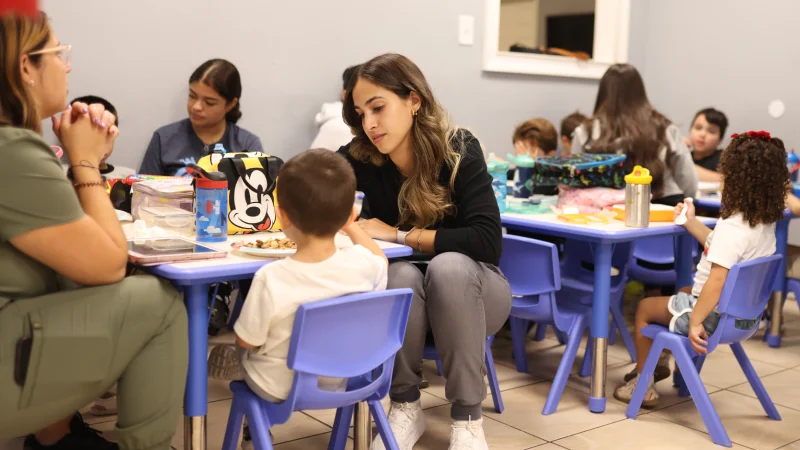
Parents not only need their children’s schools to be a place of teaching; they also need them to become a place of belonging. And if your child is on the autism spectrum, that idea will always be accompanied by questions like: Will they make friends there? Will they understand him like I do? Will they accept him?
The good news is that today, autism inclusion is much more than a concept.
Yes, the educational landscape around Autism Spectrum Disorder is rapidly evolving. Today, the inclusion of people with autism is a teaching tool that, when implemented correctly, offers amazing benefits… not just for your child, but for every child in the classroom.
Join us to explore how the inclusive practices promoted by Koala ABA & Learning Centers are building a more empathetic society!
How Does Inclusion Impact the Social Development of Children with Autism?

It is a fact that integration into inclusive classrooms offers children with autism a learning environment with unique opportunities for their development, which complement ABA Therapy. Likewise, the benefits of autism inclusion manifest in practical ways in their daily lives, fostering independence and confidence.
Improving Social and Communication Skills.
For a child with autism, daily interaction with typically developing peers provides a natural context for practicing social interactions. Furthermore, this peer modeling is a central component for developing communication and play skills, which are difficult to simulate in other settings.
This social immersion environment offers both immediate and long-term results for children with autism:
- Direct Social Modeling: They assimilate functional language and social skills by observing their neurotypical peers.
- Accelerated Generalization: They successfully apply skills learned in ABA Therapy to varied school settings.
- Communicative Richness: They gain diverse exposure that allows them to manage real-world social interactions.
Autism Inclusion: What Does My Child Really Gain in the Classroom?
Autism inclusion is a term that is often misinterpreted as simply “being in the same physical space,” or spending limited time with other children. However, to be truly effective, this inclusion must be intentional, profound, and rooted in respect for neurodiversity.
At Koala ABA, we know that the goal of inclusive education is for the child to feel valued, participate fully in school activities, and thrive socially. Therefore, understanding this distinction between mere presence and genuine inclusion in schools is the first step toward education that benefits the entire community.
What is Inclusive Education for Autism?

True inclusive education for autism is a philosophy that transforms the entire learning environment. It also requires a commitment from the school, therapists, and family; to create a dynamic support system that constantly adapts to the individual needs of each student.
Thus, autism inclusion implies a real responsibility toward your child’s development, reflected in the following pillars:
- Integration and Support: Your child can participate in regular classrooms while receiving specialized support, not just time spent there.
- Flexible Learning: Strategies and materials are adjusted to your child’s unique needs to ensure effective learning.
- Development with Equity: Fair access is guaranteed to social interaction, learning, and the development of all their skills.
Why is a Sense of Belonging Vital in an Inclusive Classroom?
The sense of belonging and active participation is the psychological foundation for the success of autism inclusion. When a child feels that their presence is important and that their interests are taken into account, their social development is boosted. This connection facilitates the learning of social skills, reducing the feeling of isolation.
This feeling of security promotes profound emotional and behavioral benefits for your child:
- Fostering Self-Esteem: The child feels valued for their contributions, strengthening a positive self-image.
- Anxiety Management: Implementing predictable routines eliminates barriers, reducing anxiety about the unknown.
- Skill Enhancement: The social environment naturally stimulates and enhances their communication and play skills.
Why is Neurodiversity a Strength for the Whole Class?

The true magic of autism inclusion is that it enriches the entire class. In this sense, the benefits of this inclusion are not limited to one group; they extend to all students, shaping kinder, more empathetic citizens who are better equipped to interact in a socially diverse world.
At this point, and by being exposed to neurodiversity from an early age, your child’s peers will be able to develop a quite profound understanding of the human condition. In this way, they can transform into future promoters of acceptance and social inclusion.
Developing Empathy and Social Awareness.
Daily interaction with children who perceive the world differently teaches life lessons that no textbook can offer; strengthening the socio-emotional learning of every student. Thus, this early exposure to difference is the foundation for the acceptance of autism in society.
This deep personal knowledge about autism inclusion translates into:
- Acceptance of Neurodiversity: They understand that there are other valid ways of perceiving the world, eliminating social prejudices.
- Development of Empathy: They develop patience, tolerance, and a high level of empathy by interacting and providing peer support.
- Elevated Social Awareness: They become more socially aware of individual needs, promoting a culture of respect.
Frequently Asked Questions about Autism Inclusion in 2025.
1. What does autism inclusion really mean?
Autism inclusion goes beyond just sharing a classroom. It means creating an educational environment where the child feels accepted and valued. It involves adapting teaching methods, promoting Neurodiversity, and ensuring that all students can learn together with equity.
2. How does ABA Therapy help achieve effective inclusion?
ABA Therapy is fundamental for successful inclusion, as it teaches effective communication skills and self-regulation strategies; preparing both the child for school and the school for the child, to create an inclusive and lasting transition.
3. What role does the sense of belonging play in the inclusive classroom?
The sense of belonging is essential. When a child with autism feels like an active part of the group, their self-esteem grows, their anxiety decreases, and their readiness to learn improves. Thus, emotional belonging also strengthens their overall well-being.
4. Why does autism inclusion benefit all children?
Because it fosters an education based on empathy and diversity. By living alongside children who feel and learn in different ways, students acquire values such as tolerance, understanding, and teamwork—fundamental qualities for a fairer and more supportive society.
Koala ABA: Where Inclusion Becomes Opportunity.

At Koala ABA & Learning Centers, we believe that true autism inclusion starts with understanding, accompaniment, and purpose. That is why our mission goes beyond teaching skills: we seek for every child to find their voice, their confidence, and their place in the world.
Our ABA Therapy program is designed to guarantee successful school inclusion. We focus on two strategic objectives: preparing the child for school and preparing the school for the child. Thus, we ensure that inclusion becomes a real opportunity for growth.
How We Prepare Your Child to Shine in an Inclusive Environment.
Our approach combines scientific evidence, empathy, and personalized strategies to guarantee a smooth transition between individual therapy and the inclusive classroom.
Through our programs, your child will be able to:
- Develop functional social skills, applicable in school and daily life.
- Learn effective communication strategies, essential for group interaction.
- Strengthen adaptability and self-confidence, to face new environments securely.
Furthermore, we work closely with educators to align their therapeutic goals with Individualized Education Programs (IEPs), ensuring that every achievement is significant and long-lasting.
Allow us to accompany you on this journey toward the confidence and sense of belonging that every child deserves!
Contact us today and discover how our ABA Therapy program can personalize your child’s school and social support.
Your child is ready to shine… we are ready to make it possible.