There’s no doubt that early detection of autism makes a significant difference in a child’s development. That’s why the Comprehensive Diagnostic Evaluation (CDE for Autism) is an essential step toward effective treatment. Most importantly, this process allows professionals to make a truly accurate diagnosis of Autism Spectrum Disorder.
At Koala ABA & Learning Centers, families find a multidisciplinary approach that includes Speech and Occupational Therapy evaluations, ensuring long-term results. That’s why this article will guide you step by step through everything a CDE involves—and the most commonly used tools to carry it out with your child’s well-being in mind.
If you’re looking for guidance and a team that supports you with both compassion and professional rigor, this guide is for you. Let’s dive in!
What Is a Comprehensive Diagnostic Evaluation (CDE for Autism)?
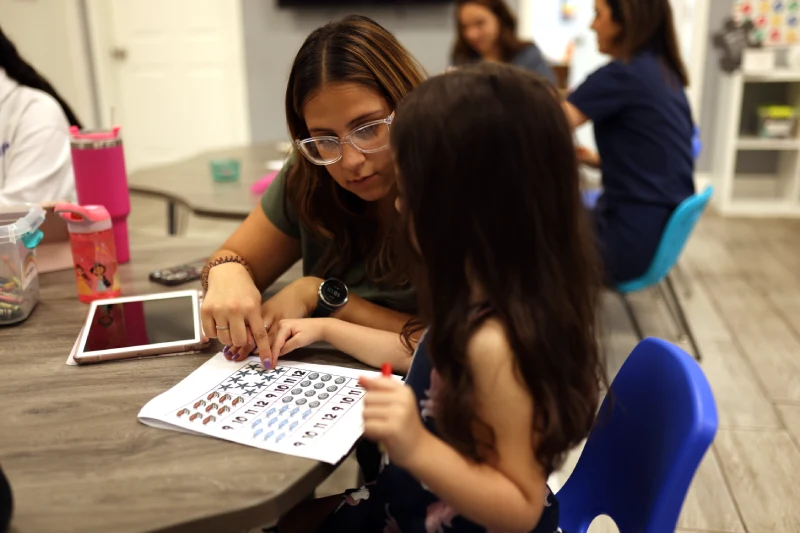
The Comprehensive Diagnostic Evaluation (CDE for Autism) is the most thorough and reliable clinical process for identifying Autism Spectrum Disorder (ASD) in children. It’s not just a single test—it’s a series of coordinated evaluations designed to understand each child’s unique profile and build a personalized intervention plan.
This type of evaluation is especially valuable during the early years of life when autism signs may still be subtle. Tools like ADOS-2, CARS-2, and programs such as EarlyPoint are part of this comprehensive approach, along with parent interviews and critical clinical assessments.
Why Is Early Autism Detection So Important?
Identifying autism early allows families to activate all the resources that boost early childhood development. That’s why getting a CDE during this stage gives your child greater opportunities for growth and success. A well-executed CDE for Autism should offer:
- A precise, multidimensional diagnosis based on clinical observation, interviews, and standardized testing.
- Early access to effective therapies like ABA, speech, occupational, and physical therapy.
- Clear, compassionate guidance for families, offering helpful and respectful information.
- Prevention of late or inaccurate diagnoses that may delay access to appropriate support.
- Greater educational and social inclusion by enabling tailored support in schools and communities.
When Should You Consider a CDE? EarlyPoint Signs Between 16–30 Months.
The earliest signs of ASD are critical for an accurate diagnosis. In this context, the EarlyPoint program is designed to detect early signs of autism in children between 16 and 30 months of age. As a parent, here are some key behaviors to watch for:
- Delays in language or non-verbal communication (such as gestures, eye contact, or babbling).
- Challenges in social interaction, like lack of interest in shared play or limited response to their name.
- Repetitive behaviors or unusual play patterns, such as lining up objects or spinning wheels repeatedly.
- Intense reactions to sounds, textures, or changes in routine, which may suggest sensory sensitivities.
- Regression in acquired skills, such as stopping speech or losing interest in surroundings.
What Does a Comprehensive Diagnostic Evaluation Include?
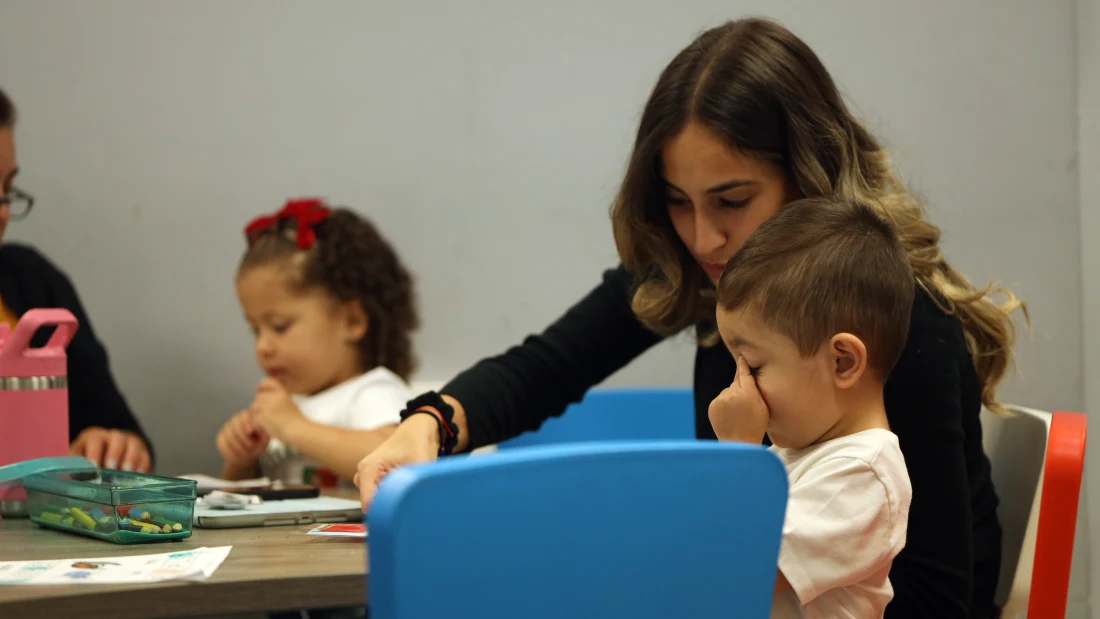
A CDE for Autism is much more than a standard medical consultation. It’s a clinical process that precisely identifies developmental delays—especially when ASD is suspected. It combines standardized tools and direct observation to build a detailed profile of your child.
At specialized centers like Koala ABA & Learning Centers, the CDE for Autism is conducted with a multidisciplinary approach involving professionals from psychology, speech therapy, occupational therapy, and more, as needed. Below, we break down each key component of this evaluation:
Parent Interview and Observation Questionnaire.
This first step is essential to understanding the child’s environment and daily routines. This first stage of the CDE for Autism helps provide a more contextualized view of the child through:
- Gathering medical and family history, including developmental milestones.
- Indirect observation via standardized questionnaires completed by parents.
- Identification of behavior patterns, interests, routines, and potential challenges.
- A space to express concerns, emotions, and expectations for the diagnostic process.
Speech and Language Therapy Evaluation.
Language in all its forms is the primary connection between children with ASD and the world around them. Speech therapy is a pillar of childhood development, so this evaluation focuses on:
- Verbal comprehension and expression, including vocabulary, grammar, and fluency.
- Receptive and expressive language—how the child understands and uses language.
- Use of gestures, eye contact, and conversational turn-taking—key markers in autism diagnosis.
- Identification of language delays or disorders that may co-occur with ASD.
Occupational and Physical Therapy Evaluations.
Occupational therapy is essential for strengthening social skills in children with autism. Physical evaluations help us understand how children relate to their environment by assessing:
- Fine and gross motor skills, such as coordination, balance, and strength.
- Sensory processing, including sensitivity to sounds, textures, or movement.
- Independence in daily activities like dressing, eating, or play.
- Sensory integration evaluation—crucial for children with atypical responses to their surroundings.
What Tools Are Used to Diagnose Childhood Autism?

The Comprehensive Diagnostic Evaluation (CDE for Autism) relies on standardized tools that allow professionals to identify ASD characteristics with accuracy. These tools not only help confirm the diagnosis but also determine the level of support each child may need.
From observation scales like ADOS-2 and CARS-2 to programs like EarlyPoint, each contributes valuable insight toward the challenge of accurate diagnosis. Fortunately, specialized centers like Koala ABA & Learning Centers combine these tools with evidence-based approaches to create a dependable profile.
EarlyPoint (16–30 Months): Early Detection and Its Impact.
The EarlyPoint program is designed to detect signs of autism in very young children—typically between 16 and 30 months. Its greatest value lies in enabling early, natural, and effective intervention:
- Detects subtle signs like lack of eye contact, absence of babbling, or social gestures.
- Allows therapy to begin before age 3, when neuroplasticity is at its peak.
- Reduces the risk of accumulating delays by addressing issues before they solidify.
ADOS-2: Autism Diagnostic Observation Schedule.
ADOS-2 is considered the gold standard in childhood autism assessment—and with good reason. It involves direct observation of the child in very specific and sensitive situations:
- Assesses communication, social interaction, and symbolic play through various modules based on age and verbal level.
- Compares behaviors to clinical criteria, supporting precise diagnosis.
- Adaptable for both verbal and non-verbal children—from 12 months through adulthood.
CARS-2: Childhood Autism Rating Scale.
Autism affects children differently, and CARS-2 helps determine the severity of ASD and differentiate it from other developmental disorders:
- Analyzes 15 behavioral areas such as social relationships, body language, and emotional response.
- Includes both parent and professional versions, offering a comprehensive view.
- Complements the ADOS-2 by providing a quantitative perspective of the spectrum.
Why Choose Koala ABA for Your Child’s CDE?
To us, every child is more than just a diagnosis or a treatment plan. At Koala ABA & Learning Centers, we understand how it feels to first face the signs of a possible developmental disorder. We also know how overwhelming that moment can be for a parent—the doubts, the fear of “what now?”
That’s why we’ve created a space where families feel heard and supported from day one. Our CDE for Autism isn’t just a clinical process—it’s the first step toward the support your child needs to live a full and joyful life.
For your peace of mind, we use state-of-the-art tools like ADOS-2, CARS-2, and the EarlyPoint early detection program. But what truly sets us apart is how we use them: with empathy and a deep appreciation for every child’s unique strengths.
When you choose Koala ABA, you receive:
- A thorough evaluation based on scientific tools.
- An environment tailored to your child’s emotional needs.
- In-depth observations in real, personalized settings.
- Clear therapeutic recommendations and a personalized report.
And above all: support before, during, and after the full diagnostic process.
Your Child Deserves a Bright Future: The First Step Starts Here.
At Koala ABA & Learning Centers, we believe in the power of early diagnosis and the limitless potential of every child. So if you suspect your child may be on the autism spectrum—or if you simply want answers through a professional evaluation—trust us. You are not alone.
Contact us today! Schedule a Comprehensive Diagnostic Evaluation with our team. The sooner you take this first step, the sooner your child can shine in their own light.